 Skip to content
The first real image and clip of Xreal’s Project Aura have been revealed.
A concept render was shown at Google I/O earlier this year when Project Aura was first announced as the second Android XR device, set to launch next year.
It’s a prism-lens see-through device in a form factor that tries to imitate the basic appearance of sunglasses, as with Xreal’s existing products. But while Xreal’s current products primarily act as a virtual monitor for your existing devices, via the included cable, Project Aura will come with a tethered compute puck running Google’s Android XR on a Qualcomm Snapdragon chipset.
The short clip depicts the relatively limited field of view at the start.
Xreal says Project Aura will have a field of view of 70 degrees diagonal, its widest yet, and have built-in head and hand tracking.
Most features and apps available on Galaxy XR will also run on Project Aura’s puck, with some notable exceptions such as the face-tracked Likeness realistic avatars, as Aura doesn’t have face tracking.
Today, during The Android Show: XR Edition, Google and Xreal showed off the device in images and a short clip. They also confirmed that it’s still on track to launch in 2026 – just days after internal Meta memos leaked revealing that its headset with a tethered puck is delayed to 2027.
Note that while Xreal devices are designed to look like sunglasses, they sit much further out from your eyes than real glasses, and thus are a markedly different device category than the AR glasses in development at Meta and Apple. Those future AR glasses use a display technology called waveguides to sit as close to your eyes as regular glasses, while Xreal uses a far cheaper but also far bulkier optical approach. They also block out most light, so can’t be used as regular indoor prescription glasses.
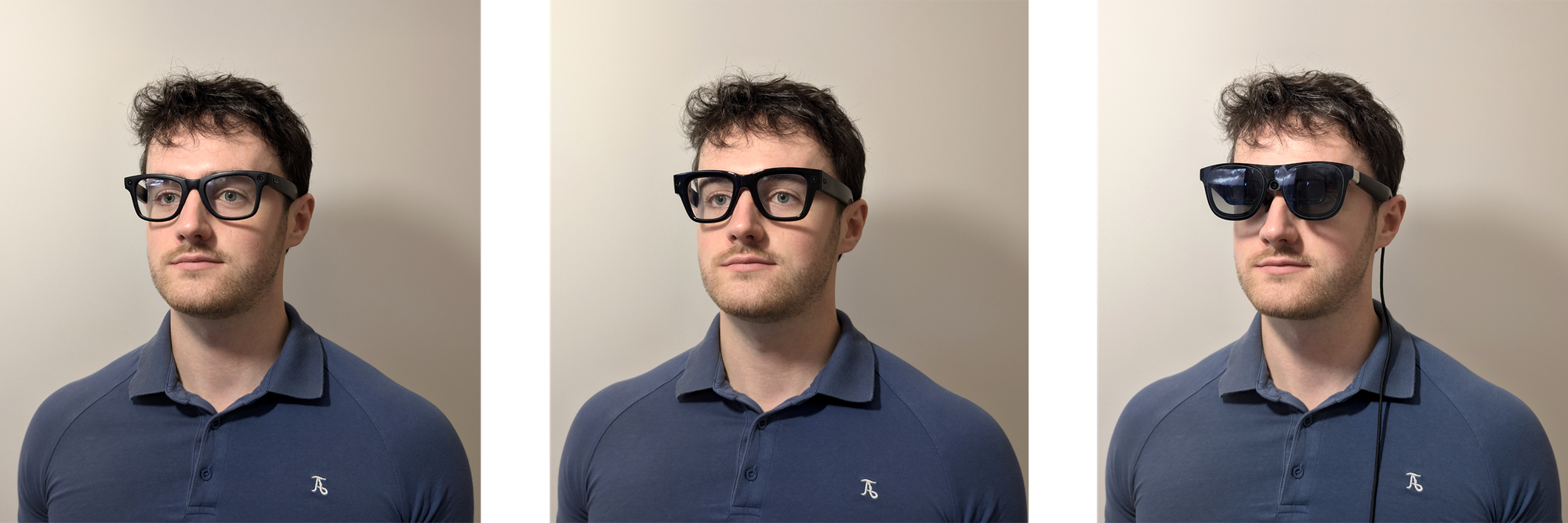
Essentially, you can think of Project Aura as a lightweight alternative to Samsung Galaxy XR that trades off field of view and opacity for sleekness, rather than competition for future outdoor AR glasses.
The confirmation that Project Aura is still set to ship in 2026 comes one month after Lynx revealed that Google terminated its Android XR deal. After Samsung, Lynx, Xreal, and Sony were the three companies Google had earlier confirmed were working on Android XR products. While declining to comment on the Lynx situation, Google confirmed that it’s still working with Sony, though we’ve yet to see even a tease of a Sony Android XR device, and its SRH-S1 headset runs Sony’s own fork of Android.
Lynx’s New Headset Won’t Run Android XR, But Will Have Widest Standalone FOV
Lynx says its new headset won’t run Android XR, as Google “terminated” its agreement, but will have by far the widest field of view of any standalone.
Source link
#Image #Clip #Xreals #Project #Aura #Android #Device #Revealed


